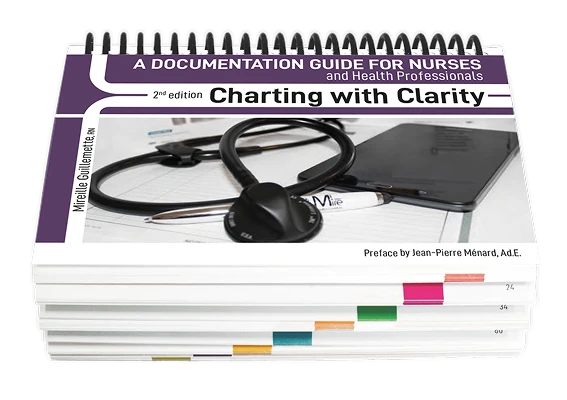
Visiting from Australia? Discover Charting with Clarity (Australian Edition)



169,00 $
Accredited online training 7 hours.
Frontline healthcare professionals must be aware of certain warning signs that represent mnemonic complaints or the loss of autonomy expressed by individuals at risk of cognitive decline. In this context, an assessment approach can be proposed. Since systematic screening is not recommended, it is necessary to target those exhibiting these symptoms and initiate a dialogue about the assessment and follow-up to be established with the person at the heart of the care.
This dialogue cannot be reduced to a simple questionnaire. The examination of the mental and cognitive state of an elderly person involves important clinical issues based on the fundamental principles of consent, respect for human rights, and socio-cultural realities, as well as the duty of protection of these vulnerable individuals. The assessment of cognition is an important part of functional assessment. Identifying all components of the mental state, including the types of memories, is the challenge at the core of the clinical examination practiced by the nurse. Knowing how to distinguish the normal elements of health associated with aging from the various pathologies associated with aging is the essence of this training on the cognitive examination of the elderly.
The deterioration of a person’s cognitive abilities is generally due to one of the following three causes: a neurocognitive disorder, delirium, or depression. This training provides the elements to identify the details of the main neurocognitive disorders.
CONTENT to be viewed using videos presented by Mireille Guillemette, and training videos recorded with elderly people:
– Identify the consequences of aging on cognition and the types of memories.
– Defining the main NCMs (major neurocognitive disorders).
– Use various recognized tests (MEEM MEEMS, Folstein, mini-cog, Mo-CA, the 5 words of Dubois, verbal fluency, the Watson clock test, etc.) that can complement the assessment of the mental state by the nurse.
Tools will be provided to properly use the main tests used for the detection and monitoring of individuals with a neurocognitive disorder.



 French French
 English (Canada)
 English (Australia)


Reviews
There are no reviews yet.