



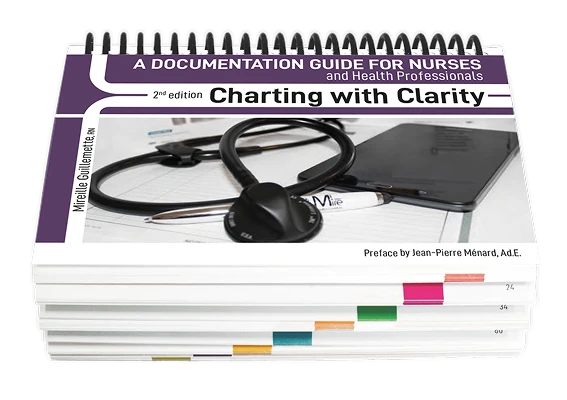
Visiting from Australia? Discover Charting with Clarity (Australian Edition)



169,00 $
Working with patients in palliative care is a daily challenge and, at the same time, a unique opportunity for growth and achievement. The daily challenge is to prevent and manage common and distressing symptoms; because managing these symptoms successfully will ensure the best possible quality of life. Managing pain, bronchospasm, dyspnea, anxiety, urinary retention, to name just a few, requires great skill. The knowledge gained from this training will allow you to intervene with confidence and compassion in sometimes very complex end-of-life situations.
Accompanying the living person means placing them at the heart of care. Our team is therefore, at its core, composed of the patient and their loved ones. Despite the requirements of the healthcare environment, the care and support provided by the team is of the highest quality. Managing symptoms They must be given with the utmost respect. Respect and humility are essential qualities.
Palliative care is not only about providing support and comfort; it should also be an opportunity to live this experience in the greatest serenity and dignity possible for the person. Sometimes accompanied by situations that may clash with our values and beliefs. Coping with death and suffering on a daily basis leaves no one unscathed. It is an opportunity, a time to reflect on the practice of palliative care and to give it its full meaning again.
Whether the end of life occurs at home, in a palliative care unit, in the emergency department, or in a long-term care facility (CHSLD), this training will undoubtedly update your knowledge to provide personalized support for the person and their loved ones. Best practices based on evidence-based data will enable multidisciplinary work where the person is at the heart of care. And to equip you with concrete tools, various case studies and essential tools for evaluation and follow-up will be offered in this enriching and dynamic 7-hour training.
MAIN OBJECTIVE OF THIS TRAINING
Providing care that allows for the maintenance of an optimal quality of life and for the dignity of the person and their loved ones.
TARGET CUSTOMER
Nurses and nurses' assistants, PAB, all professionals and stakeholders working in palliative care units, long-term care, CH and home care.
LEARNING ACTIVITIES
Dynamic online training. Case studies for an intervention that prevents and manages the most common symptoms encountered at the end of life. Questionnaires, worksheets to be completed, videos, etc. Case studies (what to do, when to refer, what to administer, etc.) will be conducted for an intervention that allows maintaining optimal quality of life. Several specific situations will be discussed (neuropathic and nociceptive pain, co-analgesia, bronchospasms and secretions, delirium, dysphagia, alternative routes of drug administration, end-of-life defibrillator, malignant wounds, problems with the mouth, etc.).
This training is a unique opportunity to update your knowledge.
This online training includes: Case studies, videos, and quizzes. Each module consists of videos that will help you better integrate the material and apply these concepts in practice on a daily basis. It’s as if you were with the trainer, but you complete the training at your own pace. The PowerPoint-style training document is available for download and printing.
You have access to your training for a period of 6 months.
This training is planned and organized to promote learning. Several videos (with an average duration of 10 to 15 minutes) and question-and-answer games will help you integrate the learning effectively.
MAIN OBJECTIVE OF THIS TRAINING
Providing care that allows for the maintenance of an optimal quality of life and for the dignity of the person and their loved ones.
TARGET CUSTOMER
Nurses and nurses' assistants, PAB, all professionals and stakeholders working in palliative care units, long-term care, CH and home care.
Duration: 7 hours accredited
Access 1 year
LEARNING ACTIVITIES
Dynamic online training. Case studies for an intervention that prevents and manages the most common symptoms encountered at the end of life. Questionnaires, worksheets to be completed, videos, etc. Case studies (what to do, when to refer, what to administer, etc.) will be conducted for an intervention that allows maintaining optimal quality of life. Several specific situations will be discussed (neuropathic and nociceptive pain, co-analgesia, bronchospasms and secretions, delirium, dysphagia, alternative routes of drug administration, end-of-life defibrillator, malignant wounds, problems with the mouth, etc.).
This training is a unique opportunity to update your knowledge.


 French French
 English (Canada)
 English (Australia)
Rachel (verified owner) –
Super training and very enriching.