
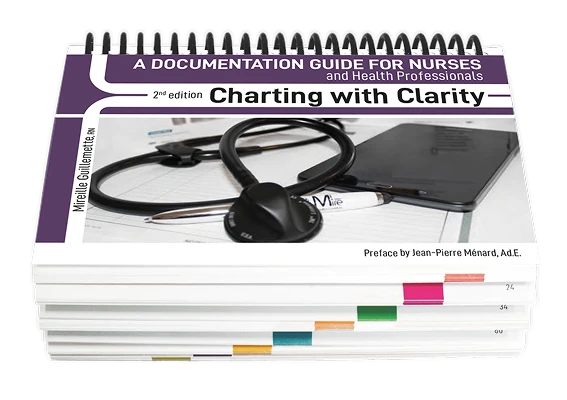
Visiting from Australia? Discover Charting with Clarity (Australian Edition)


Clinical evaluation is at the heart of our work and poses many challenges today.
What most often allows a diagnosis to be made?
Answer: 1- Anamnestic history (70 %) followed by 2- a physical examination (15 to 20%).
Diagnostic tests (10 % to 15 %) will most often confirm your clinical impression and allow the doctor to confirm a diagnosis.
The population is aging And this places many constraints on the healthcare settings that serve this increasingly large population of older people suffering from chronic illnesses and major cognitive impairments. The assessment of the physical and mental health status of these people, and all the clinical decisions that result from it, must be based on evidence-based data in a context where aging is heterogeneous.
This training is based on the teachings of Philippe Voyer; the main references are his latest works. The concepts are supported by the evidence.
Conduct the initial or follow-up clinical examination adapted to the realities of clinical settings.
This training is particularly aimed at nurses and nurses practicing with adults and seniors from all care settings. The nurses and auxiliary nurses They are also welcome because they have an important role in contributing to the evaluation. Inhaler therapists and other team members because patient evaluation is a teamwork effort.
Case studies will allow participants to evaluate the safest interventions to provide a rapid recovery of the state of health. Realistic videos covering the anamnesis, cardiac auscultation, and a brief examination of the abdomen will be presented to you.
Trainer: Mireille Guillemette, B.Ed. educator and author, consultant, teacher and member of the mentoring team of the CEVQ (Centre d’excellence du vieillissement de Québec)
OIIQ, OIIAQ, OPIQ accredited training course 7 hours
CLIQUER SUR MODULE 2 POUR DÉBUTER VOTRE FORMATION EN LIGNE


 French French
 English (Canada)
 English (Australia)

Karine Leroux says:
J’ai adoré, merci beaucoup. bon rafraichissement , facile a comprendre. Ou puis trouver les documents a télécharger comme aide mémoire?
Thank you
karineL
Marlène Joseph says:
Bonsoir Madame Mireille,
Merci beaucoup, j’ai beaucoup appris tout au long de la formation.
Encore mes félicitations.
Marlène